
Jollof Rice, Fried Rice & Goat Meat: A Day with Egbe, Catering in Nigeria
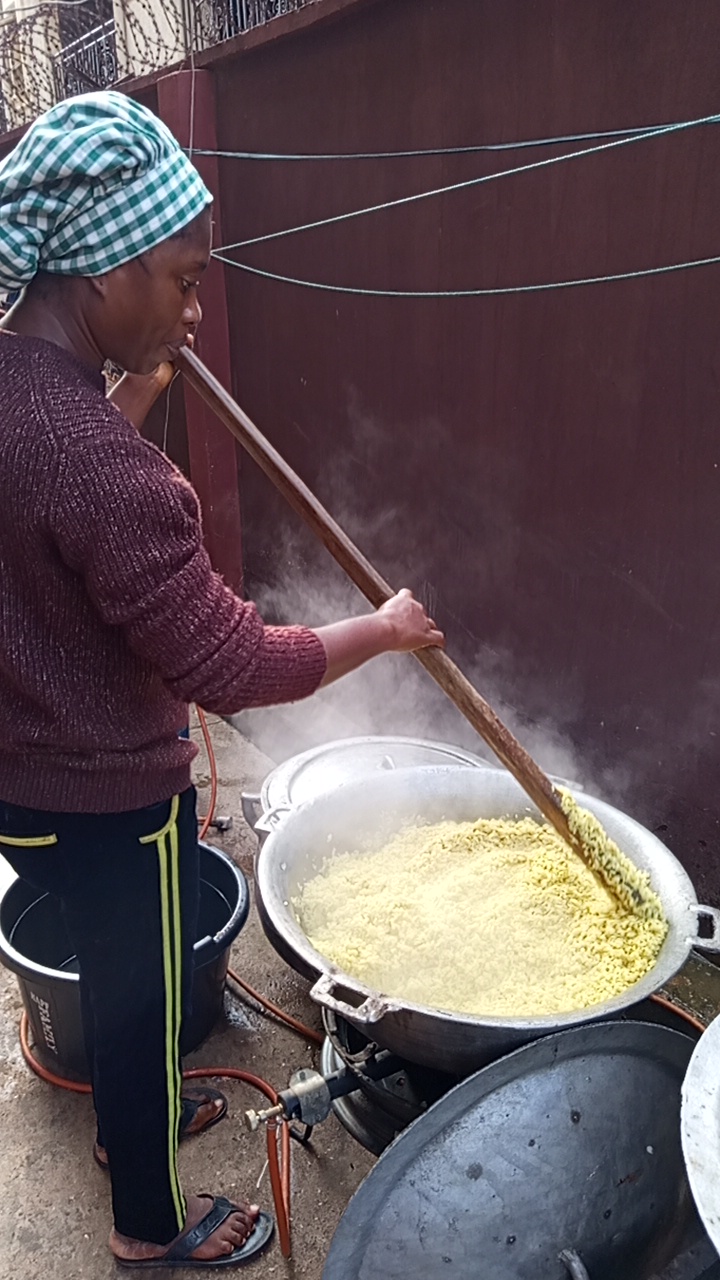
There are moments when you don’t just feel like a guest – but right in the middle of real life. That was the case for me on July 27, 2025 in Nigeria. Egbe, an experienced caterer with her own small business, together with an assistant, prepared Jollof Rice, Fried Rice, chicken, and salad early in the morning for a church order. I got to help a little – chopping, observing, marveling.
What many might think of as street food is actually true craftsmanship, with heart, structure, and pride. And a memory that lasts.
The Courtyard as a Kitchen: Cooking Outdoors
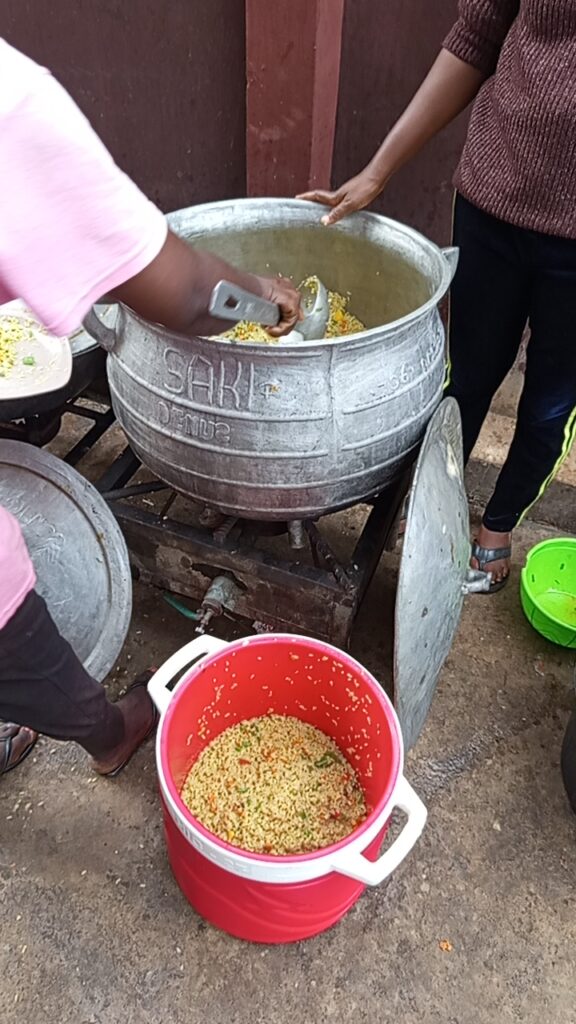
The setting: the courtyard of a regular house where several families live. No professional kitchen, no stainless steel surfaces – instead, two large gas stoves, pots, cutting boards, plastic chairs, and buckets of water. An experienced duo that knows exactly what to do.
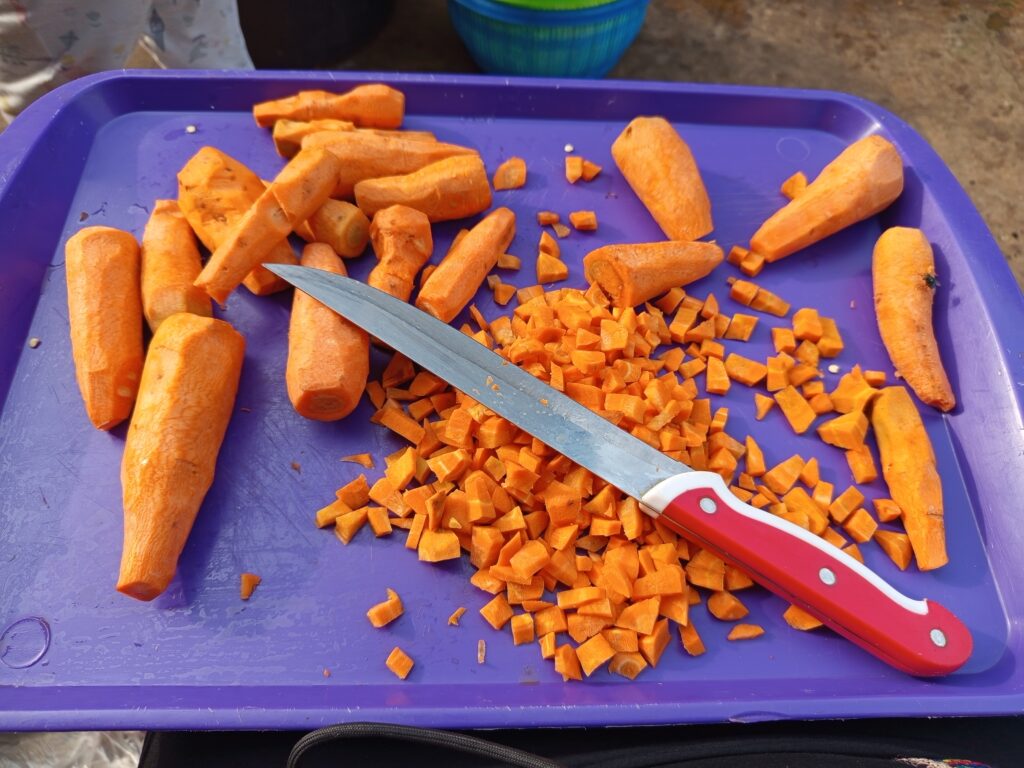
I arrived at eight in the morning – already a challenge for a morning grump like me – but most of the work was already in full swing. Carrots were peeled, bell peppers and cabbage chopped, rice washed, oil heated. I chopped a little too, but I could barely keep up with their pace.
Fried Rice and Jollof Rice – Two Nigerian Classics
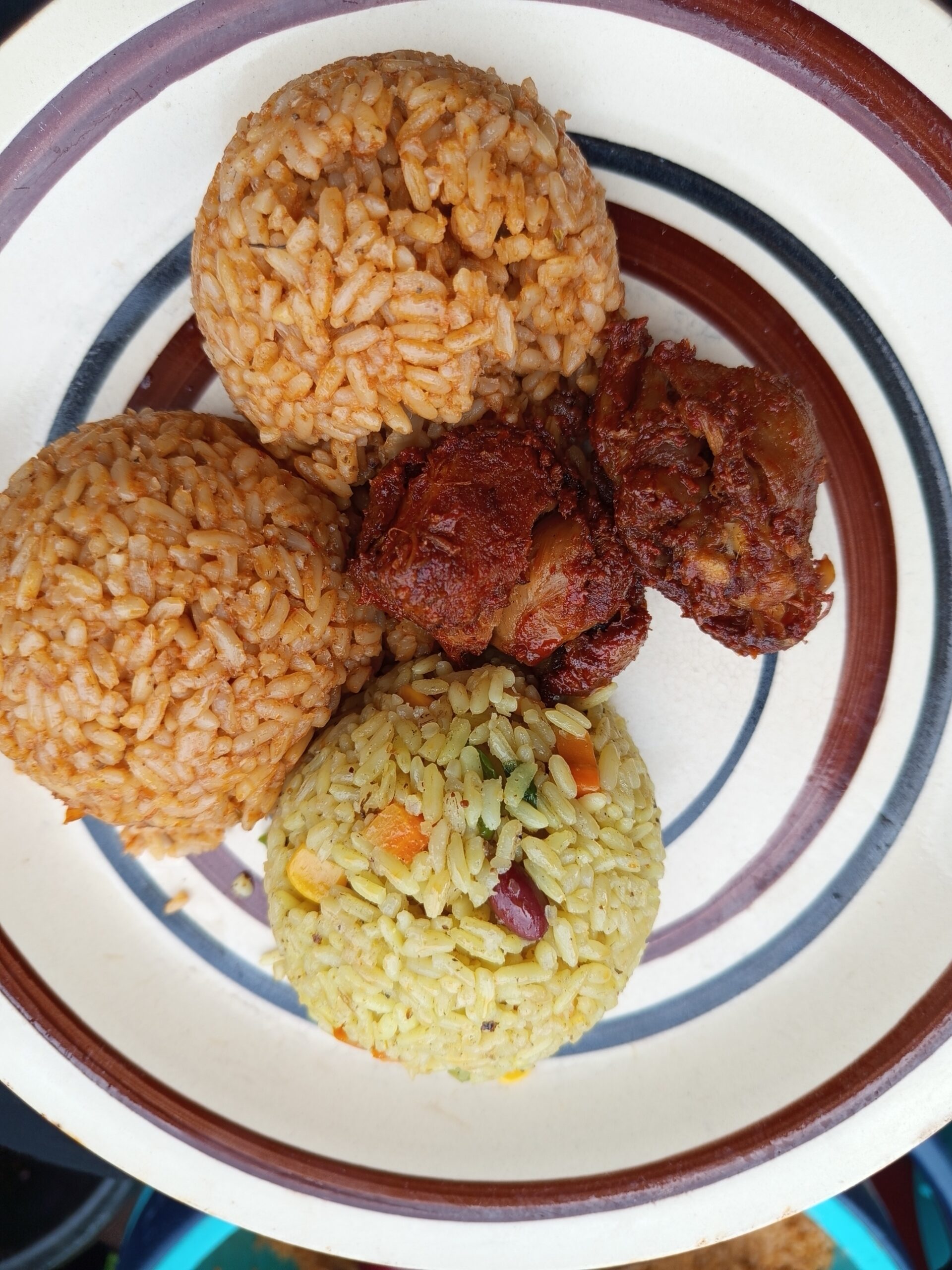
The first pots soon filled with fragrant Fried Rice, colorful with vegetables and spices. Jollof Rice, Nigeria’s most famous rice dish, was cooked separately – in a rich tomato base, with oil, chili, and its characteristic red color that makes it unmistakable.
At the same time, chicken pieces were fried, so that each portion contained meat, salad, and rice. Goat meat was prepared for a separate order – another popular Nigerian dish often served at celebrations.
Precision, Hygiene, and True Craftsmanship
The entire process was more structured and hygienic than one might expect from buckets, an open courtyard, and bowls.
- Water for cooking and washing was freshly fetched
- Utensils were washed in a large basin (container)
- Hands were washed regularly and work surfaces cleaned
- Everything was packed carefully and in portions
Anyone who thinks “outdoor kitchens” are chaotic or unhygienic hasn’t seen how things are done in Nigeria. Cleanliness is a matter of pride – even without tiled floors and running water.
Packing, Delivering, Serving
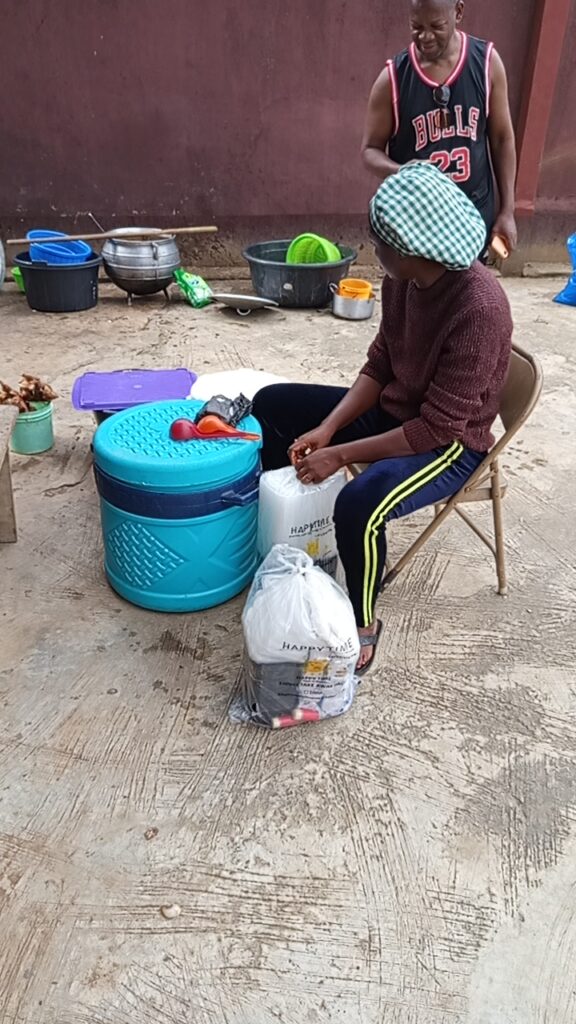
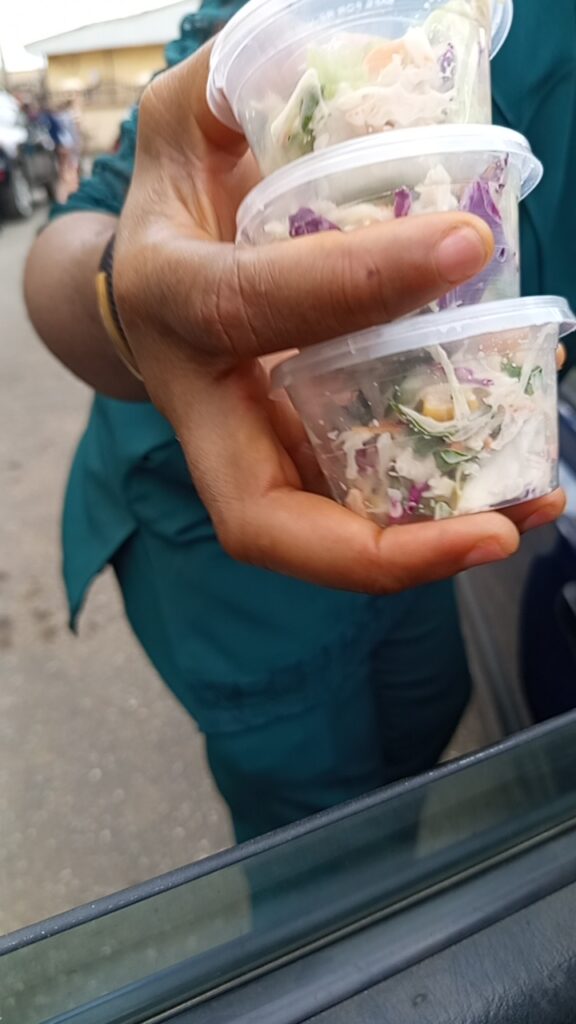
After cooking, the portions were filled into Degel (round disposable bowls) – Jollof Rice, a piece of fried chicken, later complemented with freshly prepared salad in small cups.
They were packed in plastic bags and delivered to a church, where the client distributed them after the service to parishioners. A classic catering order in Nigeria – fast, efficient, and lovingly prepared.
An Insight into Nigeria’s Everyday Economy
What impressed me most that morning was not just the food, but the whole process:
Women like Egbe handle such orders every day, often with only one or two helpers – without modern kitchen equipment, but with organizational talent, experience, and the ability to prepare large quantities perfectly.
This is Nigeria, as it works in everyday life: with initiative, manual work, and entrepreneurship – beyond news images, real and admirable.
Conclusion: Cooking as Art, Catering as Culture
July 27 was more than a day in the courtyard for me. It was an immersion into the real, creative, functioning Nigeria. A morning in which I not only learned how to perfectly season Fried Rice, but also how much dedication and structure lie behind a seemingly simple dish.
If you truly want to experience Nigeria, leave the main streets. Go into the courtyards. Watch. And if you may: chop along.
Manuela Haag