

Makoko in Lagos: Life on the Water – Between Hardship and Hope
Makoko in Lagos is considered one of the most unusual and at the same time most discussed districts in West Africa. Built on stilts above the waters of the Lagos Lagoon, thousands of people live here under the simplest conditions. But behind the images of poverty lies a fascinating reality full of survival skills, community, and change.
What is Makoko?
Makoko is an informal settlement on the coast of the Lagos metropolis in Nigeria. It is estimated that between 100,000 and 300,000 people live here, but there are no exact figures – because the district is not officially registered. Large parts of the neighborhood are located directly on the water, where houses are built on stilts and boats are the main means of transportation.
The area originally emerged as a fishing village of the Egun and Ijaw, two ethnic groups that traditionally live from fishing. But with the rapid growth of the megacity Lagos, Makoko became a refuge for many people who could no longer afford life in the city.

Life in the Floating Community
The living conditions in Makoko are difficult: there is hardly any access to clean drinking water, electricity, or medical care. Many residents live in simple wooden huts without sanitation. Schools and health stations are often improvised or underfunded. Nevertheless, Makoko is more than a “slum” – it is a lively, dynamic place where children laugh, boats glide by, traders call out, and life pulsates.
Challenges and Opportunities
Makoko symbolizes the problems of urbanization in Africa: land scarcity, poverty, lack of infrastructure, and government neglect. Again and again, there are eviction threats by the government, which wants to use the area for construction projects.
But at the same time, Makoko is increasingly becoming a symbol of resilience and innovation. Various NGOs, architects, and activists are working to develop sustainable structures – from floating schools to alternative energy supply and educational projects for children.

Makoko Floating School
A well-known example of hope in Makoko is the Floating School, an architecturally innovative project that gained worldwide attention. The floating school, designed by Nigerian architect Kunlé Adeyemi, offered a sustainable solution to the education problem in water-based settlements. Even though the first model collapsed in 2016, the idea was further developed and is now an inspiration for other projects in Nigeria and beyond.
Why Makoko Deserves More Attention
Makoko reflects how millions of people live in Africa’s rapidly growing cities – without help, but not without hope. Anyone who visits Makoko doesn’t just see poverty but also creativity, solidarity, and a will to live.
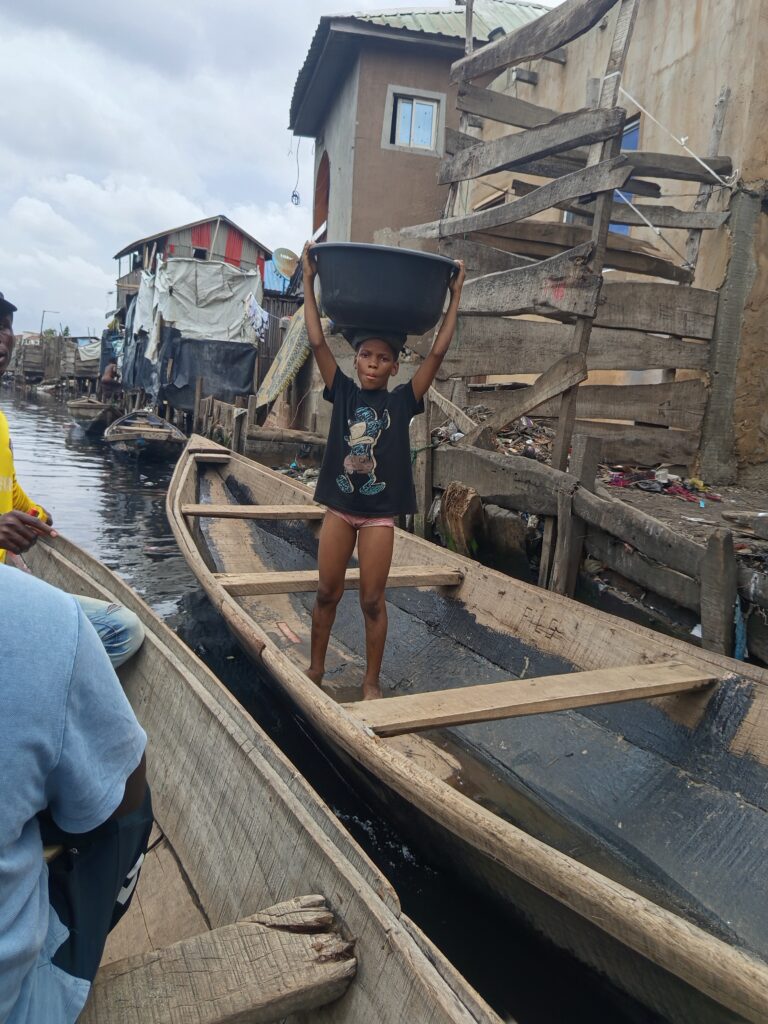
The district shows that even in extreme living situations, innovative solutions can emerge when people are involved, heard, and supported. Makoko deserves respect – not pity. And it needs attention – not just as an exotic photo motif, but as a reality that is part of our global coexistence.
Frequently Asked Questions about Makoko (FAQ)
Where is Makoko located?
Makoko is located in Lagos, Nigeria – right on the edge of the Lagos Lagoon.
How many people live in Makoko?
Estimates range from 100,000 to 300,000 people. There is no exact census.
Is Makoko safe?
As in many informal settlements, safety depends greatly on the time of day, the area, and who you are with. Tours with local guides are recommended.
Is there tourism in Makoko?
Yes, there are occasional boat tours through Makoko. However, it is important to act respectfully and avoid “poverty tourism.”
Conclusion: Makoko is More Than a Slum
Makoko stands for the extremes of urbanization in Africa – but also for hope, innovation, and community. Anyone talking about Lagos should not forget Makoko. Because here it becomes clear how strong people can be even under the toughest conditions – and that change is possible.