

I want to share my experience with Nigerian black soap with you. Perhaps you don’t know it yet – it’s a true all-rounder among natural soaps and has completely convinced me.
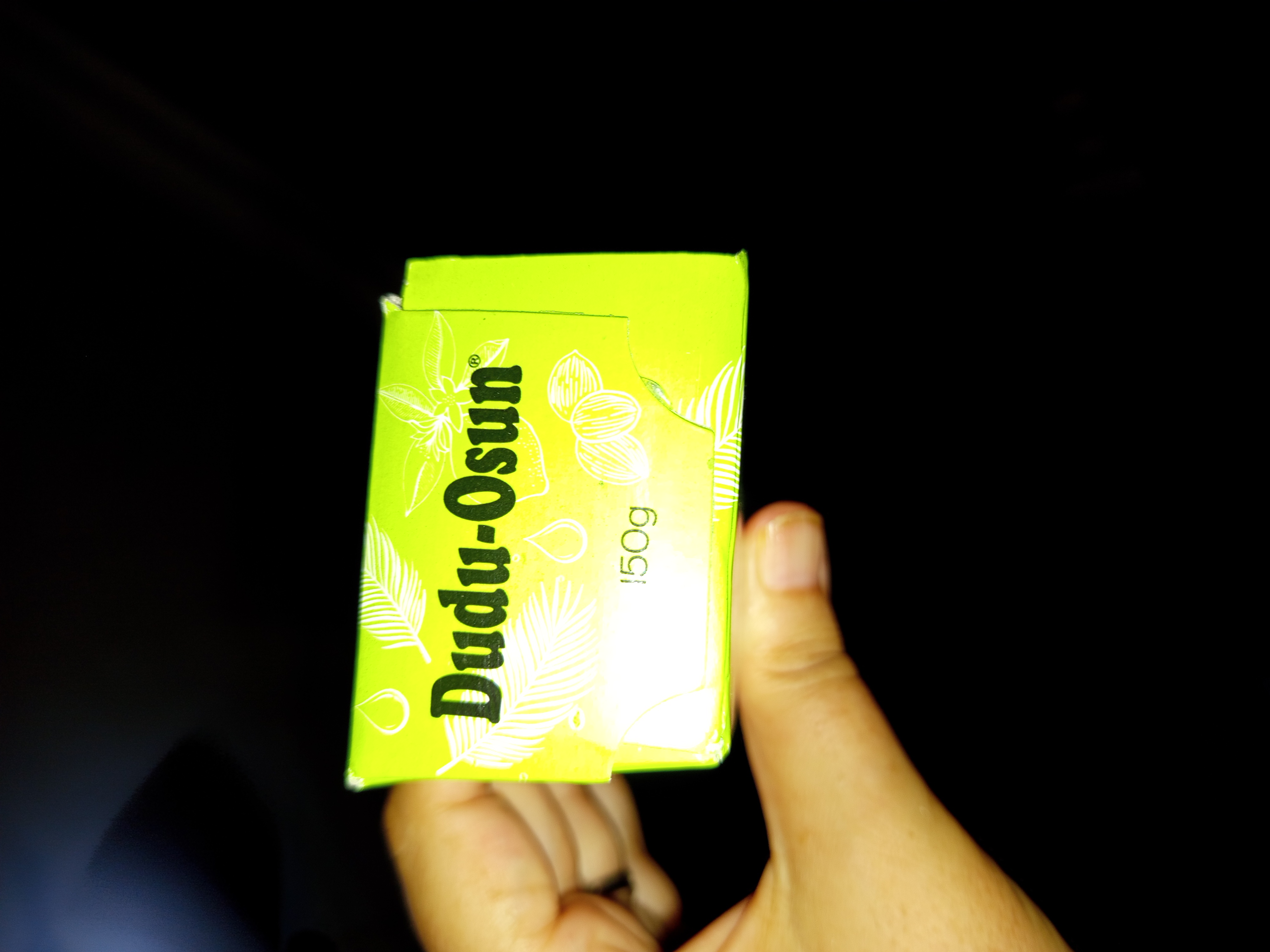
I finally found it on a market in Nigeria: a large block of original black soap, made by an elderly woman in the traditional way. I was already familiar with the well-known packaged Dudu Osun soap, but this raw natural product is something truly special. By the way, “Dudu” means “black” in the Yoruba language.
The History and Origin of Black Soap
Black soap, often called “Ose Dudu” or “Alata Samina” in Nigeria, looks back on a centuries-old tradition. Its origins lie in West Africa, particularly Nigeria and Ghana, where it has been made by families for generations using handed-down recipes.
Traditionally, the soap is made from the ash of plants like plantain skins, cocoa pods, or palm leaves, which is rich in potassium carbonate. This ash is mixed with natural oils – typically palm kernel oil, coconut oil, and rich shea butter – and water. The process of stirring and curing can take weeks and is often done by hand. This also explains the characteristic, irregular consistency of original black soap.
What Makes Black Soap So Special
Unlike many industrially produced soaps, traditional black soap contains no synthetic surfactants, parabens, or artificial fragrances. It is a pure natural product that is especially suitable for natural skincare.
I was surprised at how well the soap lathers – a creamy, gentle foam that spreads pleasantly. Since I’ve been using it, skin irritations that had bothered me for a long time have significantly improved. It has also convinced me as a shampoo replacement; my hair feels clean without drying out.
Uses and Effects
Black soap is used in traditional African medicine and skincare for various purposes:
- For skin impurities and acne: Thanks to its mildly antiseptic properties
- For sensitive skin and eczema: The shea butter it contains soothes and nourishes
- For gentle shaving: As a natural shaving gel
- For hair care: As a mild shampoo for voluminous hair
- For minor skin irritations
What to Consider – Not Suitable for Everyone
Despite its many positive properties, black soap is not suitable for everyone. On very dry skin, it can initially have a drying effect due to its cleansing properties. People with sensitive skin should test the soap on a small area first, as the natural ingredients are potent.
The characteristic, earthy, and slightly smoky scent of the original soap takes some getting used to and is not comparable to perfumed natural cosmetics products. Those who find the scent too intense can opt for the commercial version like Dudu Osun, which is usually scented with natural fragrances like lemon or orange.
The Difference Between Traditional and Industrial Soap

There is a noticeable difference between raw, traditional black soap and factory-made products:
The traditional variant is softer, has an uneven texture, and the typical natural smell. It contains no additives and works more intensely.
The commercial soap from the factory is harder, uniformly shaped, smells pleasant from added fragrance oils, and is gentler on the skin due to standardized production. It is more suitable for daily use and is available in many online shops for natural cosmetics and African products.
My Conclusion on Black Soap as a Natural Product
Nigerian black soap has convinced me as an effective and versatile natural product. It combines ancient knowledge with modern demands for natural care and genuine eco-cosmetics. For me, it has become a fixed part of my body care routine – a piece of lived African tradition that I no longer want to miss.
If you’re looking for an alternative, natural care option that works without chemicals and supplies the skin with high-quality plant substances, it’s worth trying this special soap. It’s best to start with a smaller amount or the milder, commercial variant to see how your skin reacts.
Manuela Haag